Heritage Walk
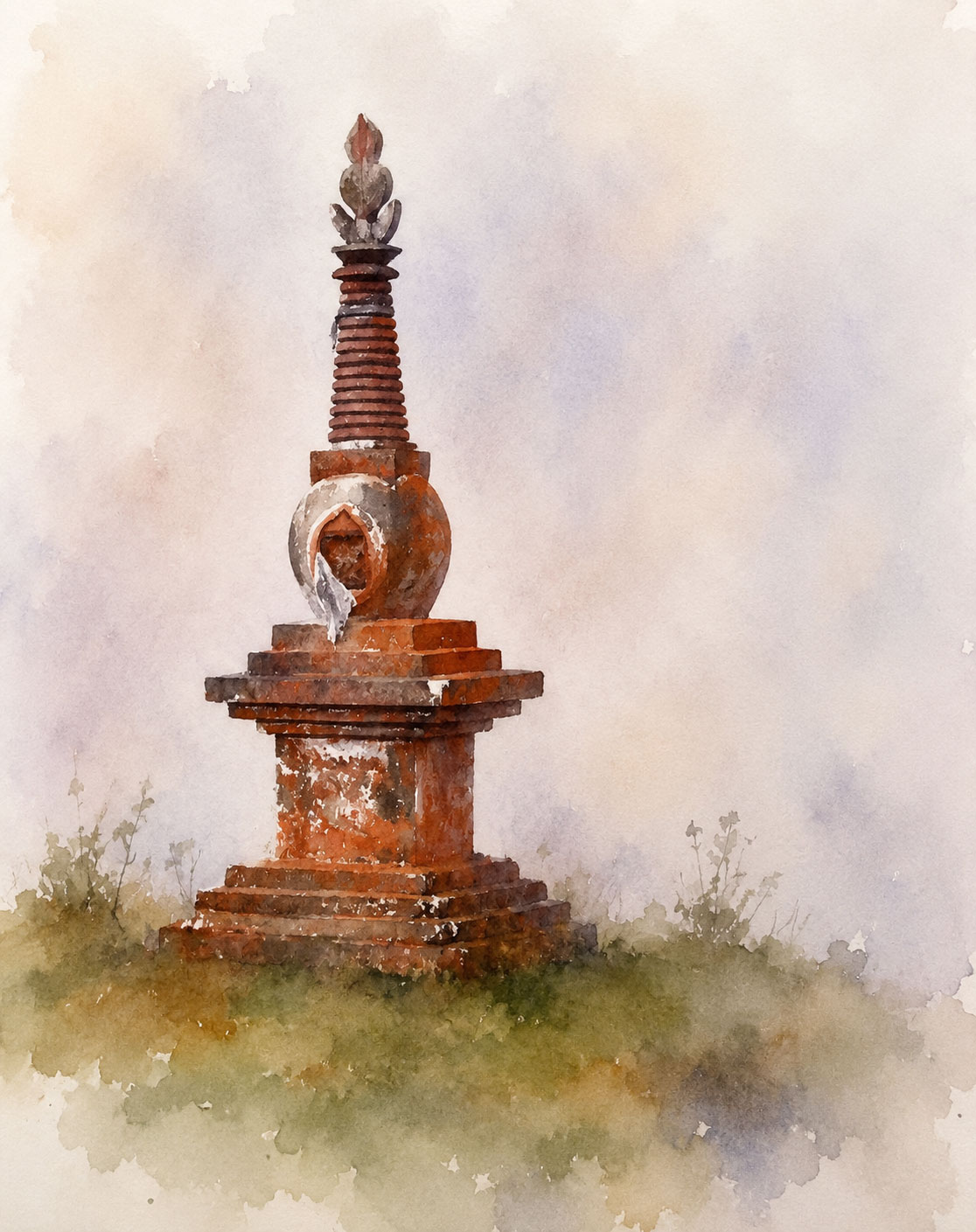
Darjeeling Heritage Walk
A walk through the railway, streets, buildings, institutions and stories that shaped Darjeeling
There is an interesting way to understand Darjeeling: don’t look at it from a viewpoint—walk through it.
The town’s history is written into its streets. A railway station tells the story of how Darjeeling became connected to the plains. A church recalls the early European community. A tea planter’s club speaks of an industry that transformed the hills. Old shops reveal the commercial life that grew around the hill station, while Chowrasta and Observatory Hill bring together traditions that are much older than the British town itself.
Our Darjeeling Heritage Walk follows these layers of history on foot, beginning at the Darjeeling Himalayan Railway Station and ending at Observatory Hill. Over approximately 3.5 km and three and a half to four hours, we walk through some of the best-known historic places in Darjeeling while also looking for the smaller details that are easy to miss when passing through town by car.
This is not simply a tour of old buildings. It is an attempt to understand how Darjeeling became the town it is today.
At a Glance
- Tour Code: KW01
- Type: Bespoke private walking tour — exclusively for you or your group, with no strangers clubbed together
- Duration: 3.5 to 4 hours
- Distance: Approximately 3.5 km
- Difficulty: Moderate
- Fitness: Average fitness required
- Group Size: Up to 8 participants per group
- Language: English
- Guide: A local expert with deep knowledge of Darjeeling’s history, culture and colonial heritage. Our guides are trained storytellers with a particular interest in the people and stories behind the town.
- Includes: Service of an expert tour guide for the entire duration of the walk
- International Tourist Tariff: USD 60
- Indian Tourist Tariff: ₹4,500
- Larger Groups: Please get in touch with us for a customised quote.
Walking Difficulty
This is a moderate urban walk, rather than a trek. The main physical challenge comes at the beginning, where the route includes a climb of around 300 metres in the first kilometre.
The route is therefore not suitable for guests with mobility issues. Comfortable walking shoes are recommended.
Darjeeling: A Town Built in Layers
Darjeeling is often introduced through three familiar images: tea gardens, mountains and the Toy Train.
All three are important, but they tell only part of the story.
Darjeeling developed during the nineteenth century as a hill station for Europeans, providing an escape from the heat of the Indian plains. As the town developed, so did the institutions and infrastructure associated with the colonial hill station: churches, schools, hotels, clubs, commercial establishments and eventually the railway.
The railway was particularly significant. The Darjeeling Himalayan Railway opened in 1881, connecting Darjeeling with the plains through an ingenious narrow-gauge mountain railway. UNESCO later recognised it as a World Heritage Site, noting its importance not only as an engineering achievement but also for the way the railway influenced the social and economic development of a multicultural region.
But Darjeeling did not remain an exclusively European settlement.
Over time, wealthy Indian families also became part of the town’s evolving social and cultural life, while Nepali, Tibetan, Lepcha and other Himalayan communities contributed to the character of the growing hill town.
That mixture is what makes Darjeeling’s heritage particularly interesting.
And it is best understood at walking pace.
22 Years Experience
5 Star Ratings
Quick Response
Dedicated Local Experts
The Walk: From the Railway to Observatory Hill
Our walk begins at the Darjeeling Himalayan Railway Station, follows Laden La Road towards Darjeeling Mall, and then continues through some of the town’s historic landmarks before ending at Observatory Hill View Point.
The route allows us to move through several different chapters of Darjeeling’s history within a relatively short distance.
1. Darjeeling Himalayan Railway Station
The railway station is a natural place to begin.
The Darjeeling Himalayan Railway, popularly known as the Toy Train, is one of the most recognisable symbols of Darjeeling. The railway opened in 1881 and was designed to overcome the extraordinary difficulties of building a railway through steep Himalayan terrain. Its loops, reverses and gradients remain part of what makes the railway remarkable.
The station is also a reminder that the railway was about much more than transporting passengers.
It helped change the relationship between Darjeeling and the plains, supporting the movement of people, goods and tea and contributing to the development of the hill town.
The Darjeeling Himalayan Railway was inscribed on the UNESCO World Heritage List in 1999.
From here, we begin walking into the older commercial heart of Darjeeling.
2. Laden La Road
Laden La Road leads us towards the Mall and passes through an area where several different periods of Darjeeling’s history meet.
As we walk, the guide helps put the buildings and streets into context: the people who lived here, the businesses that developed around the growing town and the changing character of Darjeeling as it evolved from a colonial hill station into a much more diverse Himalayan town.
This is one of the advantages of exploring Darjeeling on foot. The distance between apparently unrelated landmarks becomes part of the story.
3. Darjeeling Head Post Office
The Darjeeling Head Post Office is an elegant nineteenth-century building that continues to serve as the town’s postal hub.
It represents an aspect of colonial Darjeeling that is easy to overlook today: the infrastructure required to connect a remote Himalayan settlement with the wider world.
Letters, documents and parcels travelled through this system at a time when communication with the plains and beyond depended on physical transport.
4. Hayden Hall
Hayden Hall introduces another side of Darjeeling’s history.
Founded as a social initiative by Catholic nuns, it reflects the educational and community-oriented institutions that became part of life in the hill town.
Places such as this remind us that Darjeeling’s history is not only about government buildings and colonial residences. Schools, charitable institutions and community organisations also helped shape the town.
5. Darjeeling Municipality Clock Tower
The Darjeeling Municipality Clock Tower is one of the town’s most recognisable historic landmarks.
The clock tower is associated with the municipality and has stood as a visible marker of Darjeeling’s civic life since 1850.
Its position on the route makes it particularly interesting because it stands among buildings and businesses representing different periods of the town’s development.
Here, the story moves from the private world of colonial residents to the civic life of a growing town.
6. Planters Club
Tea changed Darjeeling profoundly, and the Planters Club offers an opportunity to understand the social world that developed around the tea industry.
The club was once a social centre for British tea planters and became an important part of the social life associated with the plantations.
It also forms part of the wider story of Himalayan exploration. The club is associated with the 1924 Everest expedition of George Mallory and Andrew Irvine, adding another layer to Darjeeling’s connection with the early history of mountaineering.
7. Keventer’s and Glenary’s
Not every historic place in Darjeeling is a monument.
Some are places where people ate.
Keventer’s and Glenary’s are two of the town’s best-known historic eateries. They were associated with the European community in Darjeeling and later became places enjoyed by generations of residents and travellers.
Today, they are part of everyday Darjeeling.
That is precisely what makes them interesting.
Heritage does not always survive behind glass. Sometimes it survives because people continue to use a place.
8. Das Studio
Das Studio provides a different perspective on Darjeeling’s past.
This century-old photography house has documented the changing face of the town over generations.
Photography is particularly valuable in a hill station like Darjeeling because so much of its history survives visually: its buildings, streets, people, fashions, railway and changing skyline.
For photographers, this is naturally an interesting stop. But even without a camera, old photographs can change the way you look at the town around you.
9. Step Aside / Deshbandhu Museum
The walk then brings us to Step Aside, the former home of freedom fighter Chittaranjan Das, now preserved as a museum.
Its presence introduces an important change in the story.
Darjeeling’s heritage is not only colonial.
The town also became connected with the wider history of India’s freedom movement, and Step Aside provides a tangible link to that period.
It is one of the places where the story of Darjeeling intersects with the larger political history of India.
10. Darjeeling Mall — Chowrasta
Eventually, the route reaches Darjeeling Mall, or Chowrasta.
For visitors, Chowrasta may simply be the place where people gather, walk, drink tea and watch the mountains.
Historically, however, the Mall represents something larger: the social centre of the hill station.
Its surrounding shops, cafés and buildings reveal how Darjeeling developed as a place where residents, visitors, traders and different communities came together.
This is also where the character of the town becomes particularly visible.
You are no longer looking at Darjeeling as a collection of historic buildings.
You are watching a living town.
11. Habeeb Mullick & Sons
Habeeb Mullick & Sons, an old curio shop, offers a glimpse into another aspect of Darjeeling’s past—the town’s trading culture.
Curio shops and trading establishments connected Darjeeling with the wider Himalayan region and with travellers who came here from outside.
The objects sold in such places also tell stories about changing tastes, commerce and the way the Himalayas were presented to visitors.
12. Oxford Book Store
The Oxford Book Store represents yet another side of Darjeeling: its literary life.
It has been frequented by generations of locals and travellers and has become a familiar part of the town’s intellectual and cultural landscape.
For a town associated so strongly with mountains and tourism, its relationship with books and writing is an important part of its identity.
13. Mahakal Temple
From the commercial heart of Darjeeling, the walk moves towards Observatory Hill and the Mahakal Temple.
This is where the history of the town reaches further back than the colonial period.
The shrine is a sacred place associated with both Hindu and Buddhist traditions, reflecting the layered religious character of the hill.
This is an important point in the walk: Darjeeling’s history did not begin with the arrival of the British.
The colonial town developed within an older Himalayan cultural landscape.
14. The Windamere Hotel
The Windamere Hotel is one of Darjeeling’s best-known heritage hotels.
Originally a colonial-era boarding house, it later became an iconic heritage hotel.
Places such as Windamere help explain the social world that developed around Darjeeling’s visitors. The town was not simply somewhere to live; it became a destination in its own right, with hotels, clubs, restaurants and other establishments catering to residents and travellers.
15. St. Andrew’s Church
St. Andrew’s Church, built in 1843, is one of Darjeeling’s important early churches and a reminder of the Scottish community that formed part of the town’s early European population.
The church contains memorials and names connected with some of Darjeeling’s early residents. The Darjeeling district administration describes it as one of the principal attractions along the Mall area and notes its connection with early residents of the town.
For anyone interested in the human history of Darjeeling, churches such as St. Andrew’s are particularly valuable because their walls and memorials preserve names and relationships that might otherwise disappear from the modern landscape.
16. Gymkhana Club
The Gymkhana Club was once another centre of social life for British residents.
Like the Planters Club, it represents the club culture that developed in colonial hill stations.
But viewed today, these clubs also tell us something about the social divisions of the period: who belonged, who gathered together and how the European community organised its leisure and social life.
17. Governor’s House — Raj Bhawan
The Governor’s House, or Raj Bhawan, is the official summer residence of the Governor of Bengal.
Its presence reflects Darjeeling’s importance within the administrative structure of colonial India and, later, the continued importance of the hill station to the state.
The building also helps explain why Darjeeling developed such a concentration of substantial residences and institutional buildings.
18. Observatory Hill View Point
The walk ends at Observatory Hill View Point.
It is an appropriate place to finish.
From here, there are panoramic views of Kanchenjunga and Darjeeling’s skyline, but the importance of Observatory Hill is not only visual. It is also one of the town’s sacred landscapes, connecting the physical geography of Darjeeling with its religious history.
After several hours of walking through railway history, colonial institutions, commerce, tea-planter culture, Indian nationalism, religious traditions and everyday life, the view provides an opportunity to step back and see the town as a whole.
What Makes This Walk Different?
The Darjeeling Heritage Walk is not designed simply to take you from one famous landmark to another.
The important part is the connection between them.
Why did the railway matter?
Why did tea create such an influential planter community?
Why were churches, schools and clubs established here?
How did Indian families become part of the social life of the hill station?
How did commerce develop?
What existed here before the colonial town?
And how did all these influences eventually produce the Darjeeling we see today?
These are the questions that make the walk more than a checklist of buildings.
Our guides share stories, anecdotes and historical context along the way, while allowing time to look at architecture, streetscapes and details that are easily missed from a vehicle.
There are also frequent opportunities for photography.
Who Is This Walk For?
The walk is particularly suitable for travellers who enjoy:
- History without needing to be a specialist
- Architecture and old buildings
- Colonial and Himalayan heritage
- Photography
- Local culture
- Stories about people and places
- Slow travel and exploring a town on foot
You do not need to arrive with a detailed knowledge of Darjeeling’s history.
Curiosity is enough.
A Few Things to Know Before You Walk
This is a 3.5 to 4-hour walk covering approximately 3.5 km.
Although the total distance is not great, Darjeeling is a mountain town. There is a climb of approximately 300 metres during the first kilometre, which is why we classify the walk as moderate.
Average fitness is recommended, and the walk is not suitable for guests with mobility issues.
Wear comfortable walking shoes and bring a light layer appropriate to the weather. If you enjoy photography, allow yourself time to stop—there will be plenty to look at.
The walk is conducted in English and is limited to eight participants per group.
A Private Walk, Not a Group Tour
The Darjeeling Heritage Walk is a bespoke private walking tour.
It is arranged exclusively for you or your own group, rather than combining you with strangers.
This makes it possible to spend more time on the subjects that interest you. If you are fascinated by architecture, we can look more closely at buildings. If old photographs and stories interest you, there is time to discuss them. If you are travelling with a photographer, the pace can accommodate photography.
The idea is simple: walk, look, ask questions and understand the place.
Planning Your Darjeeling Heritage Walk
Tour Code: KW01
Duration: 3.5–4 hours
Distance: Approximately 3.5 km
Difficulty: Moderate
Group Size: Maximum 8 participants
Language: English
Tariff
- International tourists: USD 60
- Indian tourists: ₹4,500
The tariff includes the service of an expert local guide for the entire duration of the walk.
For larger groups, please get in touch with us for a customised quote.
If you are planning your time in Darjeeling and would like to understand more than the usual viewpoints and sightseeing stops, speak with us about the walk. We will be happy to discuss the route, the pace and whether it suits your interests.
Phone / WhatsApp: +91 9733000590
You can also use the enquiry form below.