Himalayan Culture Walk
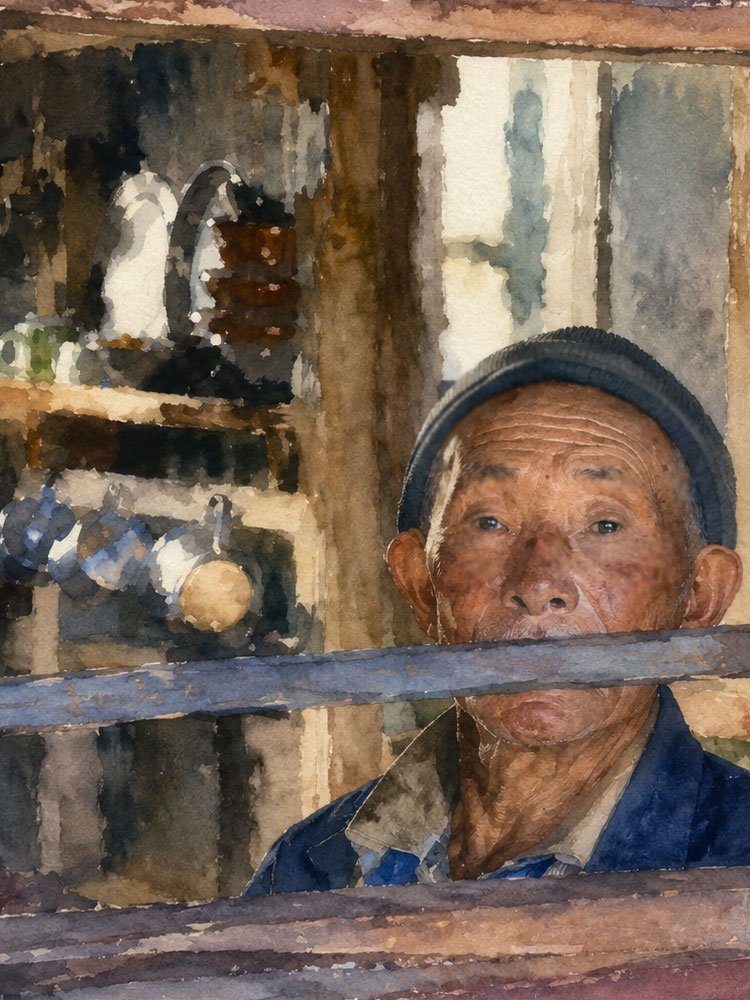
From Chowrasta to Bhutia Busty — A Walk Through Darjeeling's Changing Identity
Darjeeling is often introduced through its Mall, colonial buildings, tea gardens and views of Kanchenjunga.
But walk downhill from Chowrasta and another Darjeeling gradually appears.
The grand hill station gives way to quieter roads, old houses and the historic Bhutia settlement. The story moves from the making of Darjeeling as a British hill station to the Indian freedom movement, and then further into the living Buddhist and Himalayan culture of the town.
This walking experience follows that transition.
Beginning at Chowrasta, the social heart of Darjeeling, we walk towards Step Aside, where nationalist leader Chittaranjan Das spent his final days and died in 1925. From there, the route continues downhill through quieter neighbourhoods to Bhutia Busty Monastery, one of Darjeeling’s most important Buddhist institutions.
The journey is short in distance but rich in context.
It is a walk about places that have changed, communities that have remained, and the different histories that have come together to make Darjeeling what it is today.
At a Glance
| Starting point | Darjeeling Mall / Chowrasta |
| Ending point | Bhutia Busty Monastery |
| Core distance | Approximately 1.5–2 km one way |
| Walking time | Approximately 30–45 minutes, excluding stops |
| Overall duration | Approximately 2–3 hours |
| Difficulty | Easy to moderate |
| Terrain | Paved roads, slopes and some uneven sections |
| Direction | Predominantly downhill |
| Group size | Private / Bespoke |
| Best suited to | Travellers interested in history, culture, Buddhism and local life |
The actual walking distance and duration can vary depending on the route taken and the stops included.
The Story Behind the Walk
Darjeeling was not created all at once.
Its history developed in layers.
There was the older Himalayan landscape and its communities. Then came the development of the hill station, followed by tea, administration, commerce, churches and hotels. The town subsequently became associated with India’s freedom movement, Himalayan exploration and mountaineering.
At the same time, Darjeeling developed as an important centre for Himalayan Buddhist and Tibetan culture.
The route of this walk allows us to see some of those layers within a relatively short distance.
At Chowrasta, we begin in the busy heart of the modern hill station.
At Step Aside, we encounter the history of India’s independence movement.
As we continue downhill, the character of the town gradually changes.
The final destination, Bhutia Busty Monastery, takes us into a different cultural landscape — one shaped by Tibetan Buddhism, Sikkimese traditions and the Bhutia community.
The walk therefore connects two sides of Darjeeling that are sometimes presented separately:
the historic hill station and the living Himalayan town.
Chowrasta — Beginning in the Heart of Darjeeling
The walk begins at Chowrasta, the open pedestrian square at the centre of Darjeeling’s Mall.
This is where much of Darjeeling’s public life still takes place.
People meet here, walk along the Mall, sit on the benches, visit the cafés and shops, and gather when the weather clears and Kanchenjunga appears above the mountains.
It is also an ideal place to begin understanding Darjeeling.
The development of the town as a hill station during the 19th century brought together administrators, tea planters, traders, missionaries, travellers and people from across the Himalayan region.
The buildings and institutions around the Mall reflect much of that history.
But rather than spending the entire walk in the familiar centre, we soon leave Chowrasta behind.
The road begins to descend.
And the character of Darjeeling begins to change.
A Short Walk Around Observatory Hill
Before beginning the descent, there is an optional short loop around Observatory Hill.
This is worth including when time and weather permit.
The hill is an important part of Darjeeling’s religious and cultural landscape, and the path leads towards Mahakal Temple, a Hindu-Buddhist sacred site where prayer flags, bells and monkeys are part of the everyday scene.
Observatory Hill also has an important connection with the history of Darjeeling’s Buddhist heritage.
The monastery that once stood here was later moved downhill to what became the present Bhutia Busty Monastery.
This provides an important link for the walk.
We begin with the old religious landscape on the hill and later arrive at the monastery that grew from that earlier tradition.
On clear mornings, the hill also provides an excellent opportunity for views before we begin our descent.
Suggested time: 20–45 minutes
The Observatory Hill loop is optional and can be shortened depending on weather, interests and the group’s pace.
Step Aside — A Quiet House with a National Story
From Chowrasta, we take CR Das Road downhill.
After only a short walk, we reach Step Aside, the house associated with nationalist leader Chittaranjan Das, popularly known as Deshbandhu.
It is easy to pass such a building without appreciating the significance of what happened here.
Chittaranjan Das was one of the prominent leaders of India’s freedom movement. He served as president of the Indian National Congress in 1922 and later helped establish the Swaraj Party.
In June 1925, Mahatma Gandhi visited Das at Step Aside.
Das had come to Darjeeling because of his poor health. He died at Step Aside on 16 June 1925, aged 55.
The house therefore connects an otherwise quiet Darjeeling street with one of the important chapters of India’s struggle for independence.
The museum on the first floor preserves personal belongings, furniture and memorabilia associated with Das. The ground floor has also functioned partly as a maternity and child welfare centre.
Where access is available, this is a stop where it is worth slowing down.
The story is not only about a famous political figure. It is also about the way national history can be encountered in ordinary places — a house, a room, a road — rather than only in monuments and large public institutions.
Suggested time: 20–40 minutes
The museum’s opening arrangements can vary, particularly outside the main visitor season. Access should be confirmed locally. Entry is generally free.
Down CR Das Road — Leaving the Hill Station Behind
From Step Aside, we continue along CR Das Road.
The road winds downhill through quieter residential areas towards Bhutia Busty.
This part of the walk is important precisely because there is no major monument at every turn.
The landscape becomes more residential.
There are cottages, gardens and green hillsides. The traffic gradually decreases, and occasional openings provide views across the lower hills.
This is the kind of walking that allows Darjeeling to be experienced as a lived-in town rather than as a collection of tourist attractions.
The descent also has a practical advantage: most of the core route is downhill.
The gradient can be steep in places, but we are generally moving with the slope rather than fighting it.
Approximate distance from Step Aside to Bhutia Busty Monastery: 1–1.2 km
Walking time: approximately 20–30 minutes at a leisurely pace
Bhutia Busty — Entering a Different Darjeeling
Eventually, the road brings us towards the gateway of Bhutia Busty Monastery, also known as Karma Dorjee Chyoling or Bhutia Busti Gompa.
The change in atmosphere is noticeable.
The monastery stands in a quieter setting, surrounded by the hills and residential landscape of Bhutia Busty.
This is not simply another old building to be photographed.
It is part of the living religious and cultural life of Darjeeling.
The monastery was originally founded on Observatory Hill in the late 18th century. Following its destruction during the Gorkha invasion, it was relocated to its present area in the 19th century, with the present monastery complex developing between the 1860s and 1879.
The monastery was subsequently damaged in the 1934 earthquake and rebuilt with support from the Chogyal of Sikkim.
Its history therefore reaches beyond Darjeeling itself and connects the town with Sikkim and the wider Himalayan Buddhist world.
Inside Bhutia Busty Monastery
The monastery follows the Nyingma, or Red Hat, tradition of Tibetan Buddhism, with strong Sikkimese influence.
Inside the prayer hall are Buddhist images and religious objects, including representations of Buddha and Tara.
The walls are decorated with murals depicting episodes from the life of Buddha, while the monastery also has a collection of old scriptures, including a prized piece associated with the Tibetan Book of the Dead.
For visitors unfamiliar with Tibetan Buddhist traditions, this is an opportunity to look beyond the architecture.
The monastery is not simply an historic monument.
Prayers, rituals and religious practice continue here.
Depending on the time of your visit, you may encounter monks engaged in their daily routines or prayers taking place within the monastery.
The experience is therefore different from visiting a museum.
It is a place where the past and present exist together.
Suggested time: 20–40 minutes
Entry is generally free, although donations are welcome.
Visitors should dress modestly, remove their shoes where required and observe the quiet atmosphere of the monastery. Photography inside may be restricted.
Opening arrangements can vary, and the monastery may be closed to casual visitors outside prayer or visiting periods. Daylight visits are recommended.
A View Towards the Lower Himalayas
From the monastery and surrounding area, the landscape opens towards the lower hills and, in favourable weather, the direction of the Teesta Valley.
The views are part of the experience, but they are not the principal reason for coming here.
What makes the stop interesting is the combination of landscape, religion and community.
The monastery sits within a living neighbourhood rather than an isolated heritage compound.
That setting helps explain something important about Darjeeling:
Its heritage is not confined to the colonial buildings around the Mall.
The town’s Himalayan communities, religious traditions and cultural institutions are equally important to its identity.
The Story of a Monastery That Moved
One of the most interesting connections on this walk is the relationship between Observatory Hill and Bhutia Busty Monastery.
At the beginning of the walk, we encounter the sacred landscape of Observatory Hill and the site associated with the earlier monastery.
Later, we arrive at its present home.
This gives the walk a sense of continuity.
Rather than treating the monastery as an isolated attraction, we can understand it as part of a longer story — one involving Darjeeling, Sikkim, Tibetan Buddhism and the changing political and cultural landscape of the eastern Himalayas.
It is one of the reasons this route works particularly well as a walking experience.
The distance between the places is short enough to walk, while the historical distance between them spans generations.
Optional Extension: Tibetan Refugee Self-Help Centre
For travellers particularly interested in contemporary Himalayan culture, the walk can be extended to include the Tibetan Refugee Self-Help Centre.
Established on 2 October 1959, the centre was created to support Tibetan refugees who had arrived in Darjeeling following the upheavals in Tibet.
Over the years it developed workshops producing traditional handicrafts, including carpets, woodcarvings, woollens and other handmade products.
Visitors may be able to see artisans at work and visit the showroom, where purchases support the community.
The centre also has a photographic exhibition documenting aspects of Tibetan history and includes facilities and institutions serving the community, including a clinic, school and home for elderly residents.
This makes the centre particularly valuable as an extension of the walk.
Bhutia Busty takes us into the older Buddhist history of Darjeeling.
The Refugee Self-Help Centre takes the story forward into the 20th-century Tibetan experience and the continuing presence of Tibetan culture in Darjeeling.
Suggested additional time: 30–60 minutes or more
The centre is generally open Monday to Saturday and closed on Sundays. Exact opening hours may vary and should be confirmed before visiting.
Entry is generally free.
Optional Extension: Himalayan Mountaineering Institute
Another possible extension takes the walk in a different direction — towards Jawahar Parbat and the Himalayan Mountaineering Institute (HMI).
This is particularly suitable for travellers interested in the history of Himalayan exploration and mountaineering.
Darjeeling’s connection with mountaineering is closely associated with Tenzing Norgay, who reached the summit of Mount Everest with Edmund Hillary in 1953.
The HMI was established in Darjeeling as a centre for mountaineering training, and its museum documents the history of Himalayan climbing.
Displays include mountaineering equipment, expedition material and memorabilia associated with the history of Everest and the people who climbed it.
Tenzing Norgay’s connection with the institution is central to the story. He served as its first Field Training Director, and the complex also contains a memorial associated with him.
For anyone interested in the human story behind Himalayan exploration, HMI provides a natural extension to the cultural history of Darjeeling.
Approximate walking time from Chowrasta: around 30 minutes, with some uphill sections.
Alternatively, the complex can be reached by taxi or shared vehicle from Chowk Bazaar, followed by a short uphill walk.
Optional Extension: Padmaja Naidu Himalayan Zoological Park
The Padmaja Naidu Himalayan Zoological Park shares the Jawahar Parbat complex with HMI.
It is particularly relevant for travellers interested in the wildlife of the eastern Himalayas.
The zoo specialises in Himalayan species and is known for its work with animals adapted to high-altitude environments, including the red panda.
For DarjeelingWalks travellers, the value of this extension is not simply seeing animals.
It provides another perspective on the natural environment surrounding Darjeeling and on the conservation challenges faced by Himalayan species.
The HMI and zoo can be combined into a longer morning programme, although they are better regarded as a separate extension rather than being forced into the core Chowrasta–Bhutia Busty walk.
Suggested time: 1–2 hours or more
Opening days and times can vary seasonally. The complex is generally closed on Thursdays, so this should be checked when planning the walk.
What About Tenzing Norgay’s House?
Travellers interested in Tenzing Norgay sometimes ask about visiting his former home.
His former residence, known as Ghang-La, is in the Kakjhora/Limbugaon area around DB Giri Road.
It is a private former residence rather than a reliable public museum or visitor attraction, and access cannot be assumed.
For travellers who want to understand Tenzing’s contribution to Darjeeling’s mountaineering history, the Himalayan Mountaineering Institute is therefore the more dependable experience.
Choosing Your Version of the Walk
The core route is deliberately short.
That is an advantage.
You can spend time talking, looking at buildings, observing neighbourhood life and allowing the story to unfold without having to rush from one attraction to another.
The Core Walk
Chowrasta → Observatory Hill (optional) → Step Aside → Bhutia Busty Monastery
Allow approximately 2–3 hours, depending on whether the Observatory Hill loop is included and how much time is spent at Step Aside and the monastery.
With the Tibetan Refugee Centre
This creates a more substantial half-day cultural experience, particularly suitable for travellers interested in Tibetan history, handicrafts and contemporary community life.
With HMI and the Himalayan Zoo
This becomes a much longer programme and works best as a separate half-day or full-day combination, particularly for travellers interested in mountaineering and Himalayan wildlife.
Walking Back — An Important Practical Point
The outward route is predominantly downhill.
That makes it comfortable for a leisurely walk, but it also means that returning to Chowrasta on foot involves climbing the same hills in reverse.
For many visitors, that is unnecessary.
From the lower part of the route around Bhutia Busty and towards Lebong, local shared taxis or other local transport can provide a practical return to the main town.
Your guide can advise on the most convenient option according to the day’s road and transport conditions.
The walk should therefore be thought of as a one-way cultural journey, rather than a circular walk that requires you to climb back to the Mall.
Who Is This Walk For?
This experience is particularly suited to travellers who:
- want to understand Darjeeling beyond the Mall and viewpoints
- are interested in history and heritage
- want to learn about India’s freedom movement
- are interested in Tibetan Buddhism and Himalayan culture
- enjoy visiting living religious institutions rather than only museums
- are curious about Darjeeling’s Bhutia and Tibetan communities
- enjoy walking through residential parts of historic towns
- want a quieter alternative to conventional sightseeing
- are interested in combining colonial history with living Himalayan culture
- would like to extend a short walk into a half-day cultural experience
It is particularly rewarding for travellers who enjoy context rather than a checklist of attractions.
Who May Find It Less Suitable?
The route may be less suitable for travellers who:
- have significant difficulty walking on slopes
- are uncomfortable on steep or uneven roads
- require completely level walking surfaces
- prefer vehicle-based sightseeing
- want to cover a large number of conventional attractions in a short time
Although the core distance is modest, Darjeeling is a hill town.
The road from Chowrasta towards Bhutia Busty contains gradients, and the return journey on foot is considerably more demanding.
What to Bring
We recommend carrying:
- Comfortable walking shoes with good grip
- Drinking water
- A light waterproof jacket
- A warm layer
- Sun protection
- Camera
Darjeeling’s weather can change quickly. Even when the morning begins clear, cloud or rain can develop later in the day.
During wet weather, some paths and road edges can become slippery, so additional care is advisable.
A Few Things to Remember
Respect the monastery
Bhutia Busty is a living religious institution.
Visitors should dress modestly, keep voices low, remove shoes where required and follow instructions about photography.
Flash photography inside the prayer hall should not be used where photography is restricted.
Allow for changing access
Opening hours at Step Aside, the monastery and other institutions can vary, particularly outside the main tourist season.
The walk should therefore be understood as an experience built around the history and character of the places, rather than a promise that every interior will be accessible.
Weather matters
Clear mornings generally offer better opportunities for mountain views.
During the monsoon, rain can make slopes and paths slippery and may affect road conditions.
Walk at Darjeeling’s pace
There is no advantage in rushing this route.
The distance is short. The value lies in noticing the transition — from Chowrasta’s busy centre to quieter residential roads and finally to the monastery and the community around it.
A Walk Through More Than One Darjeeling
The most interesting thing about this walk is not any single building.
It is the transition between them.
At Chowrasta, we begin with the familiar image of Darjeeling — the Mall, cafés, shops and the old hill-station atmosphere.
At Step Aside, we encounter a very different story: the final days of one of India’s important nationalist leaders.
As the road descends, the colonial centre gradually gives way to the quieter neighbourhoods of Bhutia Busty.
And at the monastery, the story continues into Tibetan Buddhism, Sikkimese influence and the living cultural traditions of Darjeeling’s Himalayan communities.
With the optional Tibetan Refugee Self-Help Centre, the story moves into the modern history of displaced Tibetans and the community they built in Darjeeling.
With HMI, it moves towards Tenzing Norgay and the age of Himalayan mountaineering.
The walk can therefore be as simple or as deep as your interests demand.
At its heart, however, it remains a short journey from the public face of Darjeeling to the living cultural landscape behind it.
Walk beyond the familiar Darjeeling. Follow the road downhill and discover the people, places and traditions that shaped the town.
Heritage Site Access
The walk includes historic buildings and institutions whose access may depend on opening hours, religious services, government activity or local arrangements.
Interior access to Step Aside, St Andrew’s Church, Windamere and Government House is therefore not guaranteed.
Where a particular site is temporarily inaccessible, the experience remains focused on the history and stories associated with the location.
Why Take This Walk?
Darjeeling has no shortage of sightseeing tours.
This is something different.
You will not simply be shown where Darjeeling’s famous places are. You will discover why they matter, who lived there, what happened there and how their stories connect with the town you see today.
From an old shop at Chowrasta to the grave of a pioneering Tibetologist, from Gandhi’s stay at Step Aside to Nawang Gombu’s Everest story, the walk reveals a Darjeeling that is easy to miss when travelling from one attraction to another.