Darjeeling tea tour
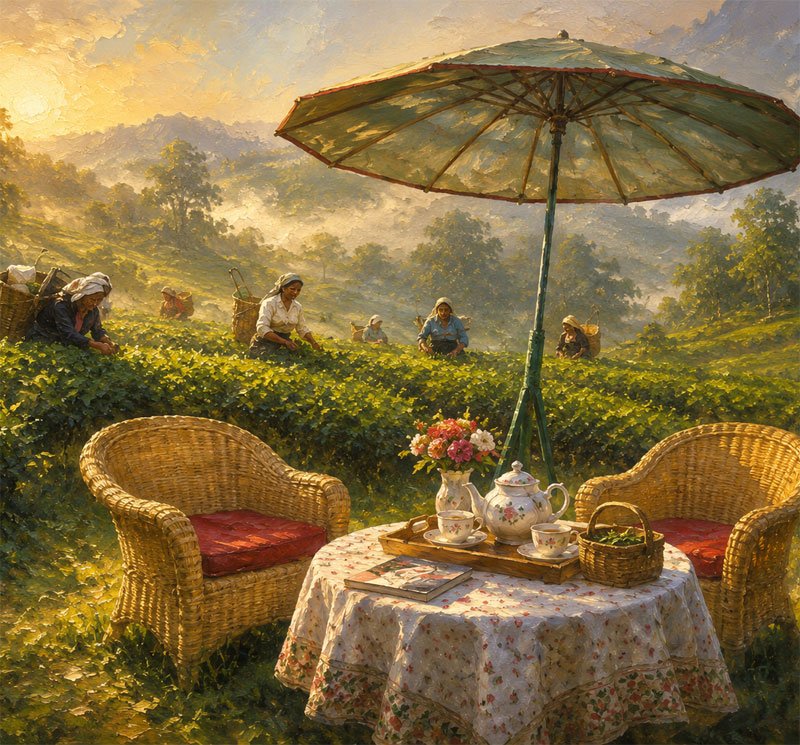
Darjeeling Tea Tour: Walking Through the Tea Country
Darjeeling is known around the world for its tea, but the character of Darjeeling tea is difficult to understand from a teacup alone. To appreciate it properly, you have to walk through the landscape where it is grown. That is the idea of tea tourism for DarjeelingWalks. For us, it is not only about staying in British colonial managers’ bungalows in the gardens, but also about exploring the land, talking to the locals, visiting the factory and understanding life at the Tea garden.
The tea gardens around Darjeeling cover the slopes in carefully planted rows, following the contours of the hills rather than imposing a rigid pattern on them. Between the gardens are forests, villages, streams and old plantation roads. Above and beyond the tea estates are the higher Himalayan ridges, while the lower valleys disappear into mist.
For travellers interested in slow travel, walking, photography, food and local history, Darjeeling’s tea country is best experienced at walking pace.
A Darjeeling tea tour can take several forms.
For a short visit, it may involve a guided walk through a tea estate followed by a visit to the factory.
For travellers with more time, it can become a multi-day experience combining tea gardens stay in a tea estate. A few plantations have retained or restored old planters’ bungalows and developed them as small heritage or plantation retreats. Staying there allows you to experience the landscape.
Darjeeling Tea
Darjeeling tea is closely associated with the particular geography of the Eastern Himalayas.
The tea gardens occupy hill slopes at different elevations, where temperature, rainfall, mist, soil and aspect influence the growth of the tea bushes.
The result is the tea that is often considered the best in the world. It is called the champagne of tea, and the name Darjeeling, to many tea lovers, reminds them of the brew more than the destination.
Today, more than 80 tea estates operate in the Darjeeling region, making tea one of the defining features of the landscape and local economy.
A Tea Garden
For a first-time visitor, the most obvious attraction is the landscape.
Rows of tea bushes follow the hillsides, often with tall shade trees rising above them. Mist moves across the valleys, and on clear days the higher Himalayan peaks may appear beyond the gardens.
But tea estate is also a place of work. Tea bushes have to be maintained throughout the year. Plucking, pruning, weeding and other estate activities follow seasonal cycles. During the main plucking periods, visitors may see workers carefully selecting the young shoots used for tea production.
The familiar expression “two leaves and a bud” describes the tender shoot traditionally selected for plucking. Seeing this process in person gives a much better understanding of the amount of skilled manual work involved before tea ever reaches a factory.
The simplest and often most enjoyable part for a visitor is simply walking through the garden.
Estate roads and paths wind through the plantation, sometimes climbing steeply and sometimes following gentler contours. Most estates have extensive walking networks.
Watch Tea Plucking and Factory Visit
During the plucking season, you may see workers moving through the tea bushes with baskets, selecting the appropriate shoots by hand.
The timing of plucking varies according to season, weather and the production cycle of the estate.
The factory is where the freshly plucked leaf begins its transformation into tea. A typical orthodox tea-making process can involve several stages. The precise process varies according to the type of tea being produced. A guided factory visit makes it possible to see how the appearance, aroma and character of the fresh leaf gradually change during manufacture.
Tea, Forest and Village Walks
The tea gardens rarely exist in isolation. A plantation may border forest, a village or a stream. An estate road can lead from tea bushes into woodland and eventually towards a viewpoint. This creates the possibility of combining several experiences in one walk:
This is particularly interesting for travellers who enjoy birds and nature. The vegetation around tea estates can support a surprising variety of birdlife, while adjoining forest patches provide a different habitat from the cultivated plantation.
Tea History of Darjeeling
Tea cultivation in the Darjeeling hills began in the mid-19th century under British rule. In the 1850s, the British established experimental tea plantations around Darjeeling, using Chinese tea varieties and later developing distinctive local hybrids.
The cool climate, high altitude, mist, and fertile mountain slopes proved ideal for producing fine-quality tea. By the late 19th century, numerous tea estates had been established across the hills, with workers brought largely from Nepal and neighbouring regions.
Darjeeling tea soon gained an international reputation for its delicate flavour and aroma. Today, its tea gardens remain an integral part of the region’s landscape, economy, and cultural heritage.
Tea Stays in Darjeeling
Singtom Tea Estate & Resort
Singtom is one of the interesting tea-estate stays close to Darjeeling.
The estate dates back to the nineteenth century, and its heritage bungalow was built in 1862. The property was restored and reopened as Singtom Tea Estate & Resort in 2014.
Singtom Tea Estate is the closest tea-estate stay to Darjeeling. You can enjoy a visit to the Darjeeling Mall and undertake all the local sightseeing in Darjeeling, while staying overnight at Singtom. There are also homestays available in the surrounding area, so if you wish to stay with a local family and enjoy the tea garden, that is also possible at Singtom.
Please note the exact spelling of the garden name: it is Singtom, not to be confused with Singtam, a town in nearby Sikkim.
Glenburn Tea Estate
Glenburn is one of the best-known plantation retreats in the Darjeeling hills.
The estate was established by a Scottish tea company in 1859 and later came into the hands of the Prakash family, whose history is closely associated with tea planting in India.
Glenburn sits above the River Rangeet and combines tea gardens, forest, river landscapes and views towards the Himalayan mountains.
The estate’s tea experience includes an introduction to tea cultivation, a factory visit, tea tasting and a guided walk through the plantation.
Chamong Chiabari Mountain Retreat
Chamong Chiabari is set within Chamong Tea Estate at approximately 4,800 feet.
The retreat occupies an elevated position above the tea gardens, with views across the surrounding hills. The property offers guided tea tours and activities including birdwatching.
Its position makes it more of a mountain retreat than a traditional old planter’s bungalow experience.
Tumsong Tea Retreat
Tumsong Tea Retreat is another property associated with Chamong’s tea estates.
Located within the Tumsong Tea Estate, the retreat combines plantation surroundings with a heritage-style stay.
Ging Tea House
Ging Tea Estate lies in the Lebong Valley, relatively close to Darjeeling but away from the busier centre of the hill town.
The estate’s heritage accommodation is known as Ging Tea House, offering visitors the opportunity to stay within the tea plantation itself.
Yule Tea Retreat
Yule Tea Retreat is located within the Mim Tea Garden and focuses specifically on the heritage of Darjeeling tea.
It is a heritage tea resort surrounded by the garden, with a history extending over more than 150 years. Its visitor experience includes exploring the tea gardens and learning about tea-making at its factory. The garden is owned by the government, but the Bungalow is leased out to private management. Adjacent to the old bungalow, a portion of land has also been leased out to another private company, which has also set up a luxury tea stay in a modern setup.
Taj Chia Kutir, Makaibari
Makaibari is one of the most recognisable names in Darjeeling tea, and the estate is now also home to Taj Chia Kutir.
The resort is located at Makaibari Tea Estate, near Kurseong, and offers a substantially more luxurious interpretation of the tea-estate experience. The property currently offers 69 rooms, suites and a cottage, along with restaurants, a tea lounge and the J Wellness Circle.
The wider Makaibari estate also presents tea, community and nature as interconnected parts of its identity.
Jungpana
Jungpana is one of Darjeeling’s better-known tea estates and is located near Kurseong.
The Jungpana property is managed by a large private hotel group now. The location is considerably more rural than central Darjeeling, which is part of its appeal. A stay here is best considered as a plantation retreat. Darjeeling town would be close to 2 hours drive from here.
When Is the Best Time for a Tea Tour?
The most interesting time depends on what you want to see.
March to May: The First Flush Season
Spring is an important period in the Darjeeling tea calendar.
The first flush is produced after the winter dormancy, and the young leaves are highly valued for their distinctive character.
This is also a good time to see the tea gardens come back to life after winter.
For visitors interested in seeing plucking and factory activity, this can be an especially interesting time.
June to September: Monsoon
The monsoon brings abundant rain to the Darjeeling hills.
The tea gardens become intensely green, but rain can make walking trails muddy, and views are often obscured by cloud.
For a walking holiday, this is generally less predictable.
October to November: Autumn
Autumn offers a different experience.
The weather is often more settled, mountain visibility can improve, and the hills have a quieter atmosphere after the main monsoon.
This is a particularly good season for combining tea gardens with walking and photography.
December to February: Winter
Winter is cooler, and the gardens are quieter.
There is less plucking activity, so travellers whose primary interest is seeing the production process may prefer another season.
For those more interested in walking, landscapes, clear winter light and quiet plantation stays, however, winter can still be rewarding.
Birdwatching at a Tea Garden
Tea estates can also be interesting for birdwatchers. Although a plantation is a managed landscape, it often sits beside forest fragments, streams and village vegetation. These adjoining habitats create opportunities to see a wider range of birds than the tea bushes alone would suggest.
A morning walk is usually more productive than a late afternoon stroll.
If birding is one of your priorities, we can design a tea-country experience that gives more time to forest edges and quieter sections of the estate rather than concentrating only on the factory and tasting room.
Darjeeling Tea visits with Darjeeling Walks
We can arrange tea experiences incorporating a tea-estate stay into a wider Eastern Himalayan journey.
The best itinerary depends on the season, your interests and how much time you want to spend walking.
If you are interested in Darjeeling tea and would like to discuss which estate, walk or tea experience would suit your trip, speak with us before making a booking.
Phone or WhatsApp: +91 9733000590
You can also use the enquiry form below and tell us what interests you most — tea, walking, photography, birds, heritage, or simply experiencing Darjeeling’s countryside at a slower pace.