Tea Tourism in Darjeeling
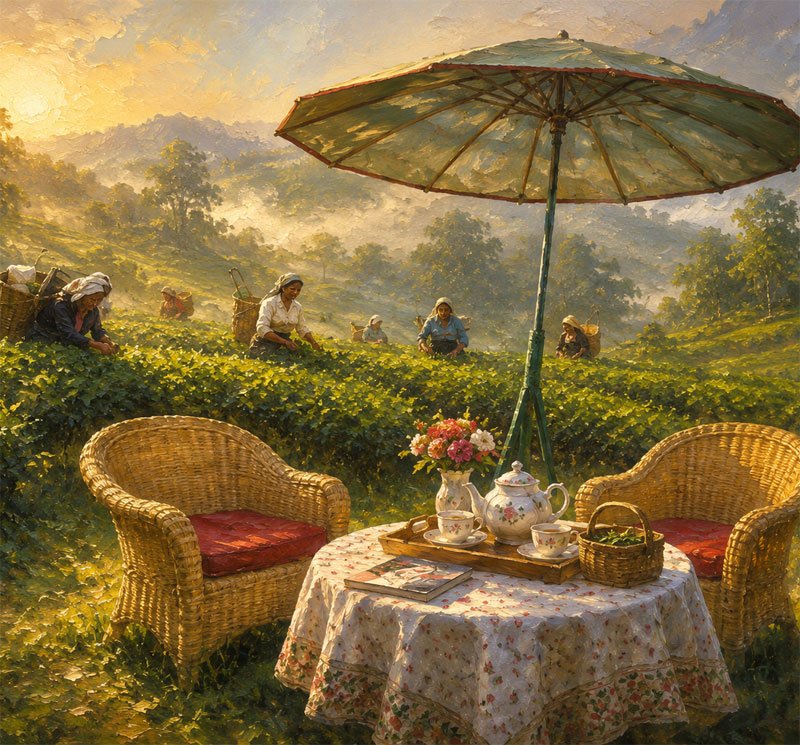
Experiencing the World Behind the Cup
Darjeeling is known internationally for its tea, but the experience of visiting a tea garden can be very different from simply buying a packet of Darjeeling tea. The plantations occupy an extraordinary landscape of rolling hills, forested slopes and mountain valleys. Within these estates are historic bungalows, working factories, workers’ settlements and villages whose lives have been connected with tea cultivation for generations.
Tea tourism offers visitors an opportunity to explore this world. It can mean walking through the plantations, watching tea pluckers at work, learning how fresh leaves are processed, tasting different varieties of tea or staying in an old planter’s bungalow. In some gardens, visitors can also stay with local families and experience everyday life in a tea-growing community.
Unlike a conventional sightseeing visit, tea tourism is about understanding the relationship between the landscape, the tea, the people and the history of the plantations. It offers a slower and more personal way of experiencing Darjeeling.
How Tea Tourism Developed in Darjeeling
Tea plantations have been part of Darjeeling’s identity since the middle of the nineteenth century. The first commercial tea gardens were established during the 1850s, and the industry expanded rapidly over the following decades. For generations, these estates remained primarily agricultural and industrial properties rather than tourist destinations.
The plantations nevertheless attracted visitors long before tea tourism became a recognised travel experience. The landscape, the old bungalows and the distinctive lifestyle of the British planters were part of the attraction of Darjeeling. Visitors interested in the history of the region were drawn to the estates, while the tea factories offered an opportunity to see how one of India’s most famous products was manufactured.
The more organised form of tea tourism developed much later, as some estates began opening their properties to visitors. Historic planter bungalows were converted into accommodation, plantation walks and factory visits were introduced, and tea tasting became part of the visitor experience.
Two different approaches gradually emerged.
The first was the plantation retreat: visitors stayed in an estate bungalow, enjoyed the surrounding landscape and experienced the traditions of tea plantation hospitality. Glenburn, established in 1859, is an example of this approach. The Prakash family, which has managed the estate for generations, developed a hospitality experience around its tea-growing heritage.
The second approach placed greater emphasis on the tea-growing community itself. Makaibari became an important example. In 2008, the estate’s village homestay initiative, known as Volunteer in Makaibari, began offering visitors accommodation with local families. The programme provided an additional source of income for participating households, including families connected with plantation work. It allowed visitors to experience the tea garden through the people who lived and worked there, rather than only through an estate bungalow.
These developments helped establish tea tourism as a distinctive experience in Darjeeling. It became possible to explore not only the tea plantation but also the history, culture and everyday life associated with it.
What Does a Tea Tourism Experience Include?
Tea tourism in Darjeeling is not a single standard activity. The experience varies according to the garden, the time available and the interests of the visitor. Some people visit for a few hours, while others spend several days living within a tea estate.
The following are among the experiences that visitors can explore.
1. Walking Through the Tea Gardens
<emphasis>Time required: Approximately 1–2 hours</emphasis>
Walking through the tea plantation is often the simplest way to begin understanding the landscape.
The tea bushes are planted along the contours of the hills, creating patterns that change with the slope and elevation. Narrow paths pass between the rows, sometimes leading to viewpoints overlooking valleys, forests and distant mountain ranges.
A guided walk can explain how tea bushes are maintained, how the plants are pruned, why different sections of a garden are harvested at different times and how the terrain influences cultivation.
The experience is particularly interesting in gardens where tea cultivation exists alongside forests, streams and villages. The visitor begins to understand that a tea estate is not simply a continuous plantation but a much larger landscape with different ecological and human elements.
2. Watching Tea Pluckers at Work
<emphasis>Time required: Approximately 30 minutes to 1 hour</emphasis>
Tea plucking is one of the most recognisable activities associated with Darjeeling. Visitors may have seen photographs of women carrying baskets through the tea bushes, but watching the work at close quarters offers a better understanding of the skill involved.
Pluckers select tender shoots, generally consisting of two leaves and a bud, according to the requirements of the particular harvest. The work requires experience, speed and considerable attention.
The opportunity to observe plucking depends on the season and the garden’s working schedule. During periods when the bushes are not producing suitable new growth, there may be little or no plucking activity.
A responsible visit should respect the privacy and working conditions of the pluckers. Photography should always be undertaken with permission, and visitors should avoid interrupting workers or entering plantation sections without authorisation.
3. Visiting a Tea Factory
<emphasis>Time required: Approximately 1–1.5 hours</emphasis>
A factory visit offers a fascinating look at what happens after the leaves leave the plantation.
Visitors can learn about the different stages of tea manufacture, including withering, rolling, oxidation, drying, sorting and packing. Seeing the machinery and understanding the sequence of operations makes it easier to appreciate why the processing method has such a strong influence on the finished tea.
A factory visit is particularly interesting during active manufacturing periods, when fresh leaves are arriving and machinery is operating. The experience can be much quieter during the winter dormant period or when a particular factory is not processing tea.
Factory access is not automatically available at every estate. Tea production is a working industrial activity, and visits must be arranged according to the garden’s operational schedule and safety requirements.
4. Tea Tasting
<emphasis>Time required: Approximately 30 minutes to 1 hour</emphasis>
Tea tasting is an important part of understanding Darjeeling tea. It allows visitors to compare teas from different gardens, processing styles and harvesting periods.
A guided tasting may include orthodox black tea, green tea, white tea and oolong. Visitors can learn to observe the appearance of the dry leaf, the colour of the liquor, the aroma and the flavour.
Tasting different teas side by side is particularly useful for understanding the differences between delicate, floral teas and those with fuller body or more pronounced fruity characteristics.
Some gardens offer tastings of their own teas, while others have dedicated tasting rooms or small retail outlets. Visitors can often purchase the teas they have sampled.
5. Staying in a Planter’s Bungalow
<emphasis>Suggested stay: 2–3 nights</emphasis>
For visitors seeking a more immersive experience, staying within a tea estate can be one of the most memorable ways to explore Darjeeling.
Some historic planter bungalows have been converted into boutique accommodation. Their architecture, verandahs, gardens, fireplaces and period furnishings preserve something of the old plantation atmosphere.
The experience is generally centred on slow travel. Mornings may begin with tea on the verandah, followed by walks through the plantation, factory visits, tastings and excursions to nearby villages or viewpoints.
Glenburn is one of the best-known examples of a plantation retreat. Singtom also offers heritage accommodation within a historic tea estate. Other properties have developed their own forms of plantation hospitality.
These stays are generally more expensive than ordinary hotels, but the tariff often includes meals and several estate activities.
6. Staying with a Tea-Growing Family
<emphasis>Suggested stay: 1–2 nights</emphasis>
A homestay within a tea garden village offers a different perspective from staying in a planter’s bungalow.
Visitors stay with local families, eat home-cooked meals and gain an opportunity to understand everyday life in a plantation community. Depending on the arrangement, the host or a local guide may take visitors through the tea garden, explain the work involved in cultivation or introduce them to the surrounding village.
Makaibari is particularly associated with this model of tea tourism. Its village homestay programme was developed to provide additional livelihood opportunities for families living in the estate villages.
The accommodation is generally simpler than a plantation retreat, but the experience can be more personal. Visitors have the opportunity to learn about local food, festivals, family life and the relationship between the community and the tea garden.
It is important to remember that the labour line is a residential community, not a tourist attraction. Visits should be arranged through participating families, and visitors should respect the privacy of residents.
7. Birdwatching and Nature Walks
<emphasis>Time required: 1–3 hours</emphasis>
Many tea estates contain more than tea bushes. Forest patches, streams, shaded areas and adjoining village landscapes create habitats for birds, butterflies and other wildlife.
Some gardens offer guided nature walks, birdwatching and opportunities to explore the surrounding forest. The experience can be particularly rewarding in estates where plantation land is interspersed with natural vegetation.
Makaibari and Glenburn are among the gardens associated with nature-based experiences. At Glenburn, visitors can explore the plantation landscape, surrounding villages and the River Rangeet area.
Wildlife sightings depend on season, weather and local conditions. They should never be treated as guaranteed attractions.
8. Learning About the History of the Tea Plantations
Tea tourism also offers an opportunity to explore the colonial history of Darjeeling.
Many estates retain old bungalows, factory buildings, historic plantation layouts and other features associated with the nineteenth-century tea industry. A knowledgeable guide can explain the development of the plantations, the arrival of migrant workers, the lives of the British planters and the evolution of the tea industry.
The stories of the planter’s bungalow and the labour line are both important. Together, they reveal the social structure of the plantation and the communities that developed around it.
For visitors interested in history, this can be as rewarding as the factory visit itself.
Some Tea Gardens Associated with Tea Tourism
Several gardens in Darjeeling have developed visitor experiences, although the nature and scale of tourism vary considerably.
Makaibari: Known for its village homestays, plantation walks, tea factory visits and opportunities to understand the life of the tea-growing community. Its location near Kurseong makes it relatively accessible.
Glenburn: A well-established plantation retreat overlooking the River Rangeet, offering accommodation in historic estate properties, plantation walks, tea experiences and nature-based activities.
Singtom: A historic estate near Darjeeling town, known for its heritage bungalow accommodation and views across the surrounding hills.
Goomtee: Known for the Goomtee Tea Retreat, which offers visitors the opportunity to stay within a working tea estate.
Happy Valley: Located close to Darjeeling town, it is one of the more accessible gardens for visitors interested in seeing tea cultivation and factory operations.
Castleton and Margaret’s Hope: Recognised names in the premium tea trade. Visits and factory access depend on estate arrangements and should be confirmed in advance.
Tumsong: A historic tea estate in the Darjeeling hills associated with plantation accommodation and tea tourism experiences.
These gardens offer different experiences, and they should not be treated as interchangeable. Some are primarily accommodation destinations, while others are more suitable for a short visit or a tea-related activity.
How Much Does Tea Tourism Cost in Darjeeling?
The cost depends largely on the type of experience. A short visit to a tea garden can be inexpensive, while staying in a historic plantation bungalow can be comparable to a premium boutique hotel.
There is no common tariff across Darjeeling’s tea gardens. Some estates offer guided activities as part of an accommodation package, while others arrange factory visits and tastings separately.
The following figures are indicative planning estimates for 2026, not confirmed tariffs for every property.
| Experience | Indicative cost |
|---|---|
| Walking through an accessible tea garden | Free to ₹500 |
| Local guide for a plantation walk | ₹500–1,500 |
| Factory visit | ₹200–800 |
| Guided tea tasting | ₹200–800 |
| Tea garden village homestay, per person, with meals | ₹1,500–2,500 per night |
| Mid-range plantation accommodation, per room | ₹6,000–15,000 per night |
| Premium plantation retreat, per room or suite | ₹25,000–60,000+ per night |
These estimates should be used as broad budgeting guidance. The actual amount may vary with the property, room category, season, group size and what is included.
Budget and Mid-range Experiences
Visitors do not necessarily need to book an expensive plantation retreat to experience tea tourism.
A stay in a village homestay around Makaibari can provide an opportunity to walk through the plantation, interact with local families and explore the tea-growing landscape. Indicative rates for the Makaibari village homestays have been reported at around ₹1,500–2,000 per person, including dinner and breakfast.
A visitor staying in Kurseong or Darjeeling can also arrange a short tea garden visit, depending on the estate’s visitor policy. This can be a practical option for those who want to learn about tea production without spending a night inside a plantation.
Premium Plantation Stays
At the other end of the scale are properties such as Glenburn, where the accommodation itself is an important part of the experience.
Glenburn’s published tariff lists a double-occupancy room at ₹48,500 per night, before 18% GST. This is a premium, full-service plantation retreat rather than a simple room tariff. The estate also offers meals and organised activities as part of its hospitality experience, subject to the current booking terms.
Such properties are suited to visitors who want to spend several days within a tea estate and enjoy a combination of accommodation, food, plantation activities and guided excursions.
Before booking, it is important to check whether the tariff includes meals, transfers, factory visits, tea tastings, guided walks and taxes.
When Is the Best Time for Tea Tourism?
Tea tourism is possible during much of the year, but the experience changes with the seasons.
March to April: The gardens begin their first major harvest of the year. This is an interesting period for visitors interested in the early growth of the tea bushes and First Flush manufacture.
May to June: The Second Flush period is an important time for tea production. Visitors may have opportunities to see active plucking and factory operations, depending on the garden.
July to September: The monsoon brings lush greenery and vigorous growth, but heavy rainfall can affect walking conditions, roads and outdoor activities.
October to November: The retreat of the monsoon brings a different atmosphere to the gardens. Autumn tea production takes place, and clearer weather can offer good conditions for exploring the landscape.
December to February: Tea production slows considerably during the winter dormant period. The gardens can still be visited, and the weather may offer clear mountain views, but factory activity and plucking opportunities are more limited.
For visitors particularly interested in watching the production process, the active plucking and manufacturing periods are generally more rewarding. The precise timing varies between estates and years.
How to Plan a Tea Tourism Visit
The kind of experience you choose should depend on how much time you have and what interests you most.
For a short visit: A guided plantation walk, a factory visit where available and a tea tasting can provide a useful introduction. Happy Valley and gardens around Kurseong are possible options, subject to access arrangements.
For a one-night experience: A village homestay can provide a more personal introduction to tea garden life. Makaibari is particularly associated with this style of experience.
For a two- or three-night stay: A plantation retreat allows time for tea walks, factory visits, tastings, nature excursions and a slower exploration of the surrounding landscape. Glenburn, Goomtee and Singtom are examples of estates associated with this type of accommodation.
A few practical points are worth remembering:
Confirm factory access before travelling. Factories may not be open to visitors every day.
Ask whether a guide is included or charged separately.
Confirm whether tea tasting is included in the visit.
If staying in a village homestay, ask about the bathroom arrangements, meals and room facilities.
Respect workers’ privacy and seek permission before photographing people.
Do not assume that plucking will be taking place throughout the year.
Confirm road conditions and transfers, particularly for estates located in remote valleys.
Tea Tourism: Understanding More Than Tea
The tea gardens of Darjeeling are living landscapes shaped by generations of cultivation and human settlement. Their history includes the colonial planters who established the industry, the workers and families who built communities around the estates, and the people who continue to maintain the plantations today.
Tea tourism allows visitors to experience these different dimensions. It can be as simple as walking between the tea bushes and tasting a freshly brewed cup, or as immersive as spending several days in a historic estate bungalow or a village homestay.
The most rewarding experiences are often those that go beyond the familiar picture of a tea plantation. Understanding the work of the pluckers, seeing the factory in operation, listening to the stories of local families and learning how the landscape has changed over time can make a visit far more meaningful.
For travellers interested in the culture and everyday life of the Eastern Himalayas, tea tourism offers an opportunity to discover a side of Darjeeling that is closely connected with its history, people and landscape.
Explore Darjeeling’s tea country with DarjeelingWalks
Discover Darjeeling’s tea gardens through plantation walks, local encounters, and experiences that reveal the history and culture behind the region’s famous tea. Whether you are interested in a short visit or a longer stay on a tea estate, we can help you explore your options.
Phone / WhatsApp: 9733000590