Tea Tourism Destinations
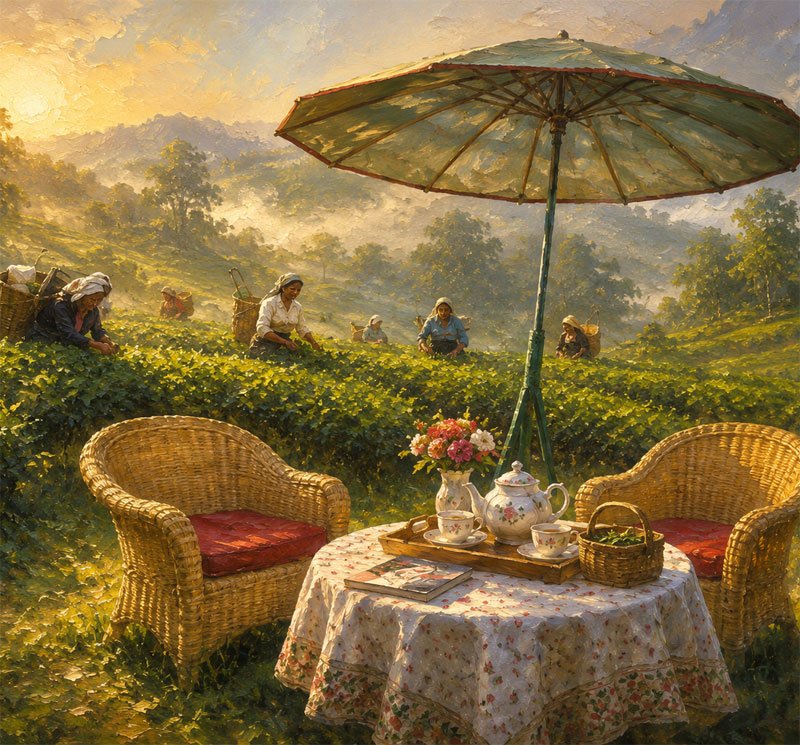
Tea tourism in the Eastern Himalayas is not confined to Darjeeling. It extends across the tea-growing landscapes of Kurseong, Mirik, the Darjeeling hills, Sikkim and the Dooars. Each region offers a different experience, shaped by its plantations, terrain, history and style of hospitality.
Darjeeling has developed some of the most distinctive tea tourism experiences in India. Here, visitors can stay in old British planter bungalows, walk through historic tea estates, explore working factories and learn about the communities that have lived around the plantations for generations. Over time, newer forms of hospitality have also emerged, including contemporary luxury retreats set within or alongside tea gardens.
Elsewhere, tea tourism takes different forms. Sikkim’s Temi Tea Estate offers an experience centred on a government-owned plantation and its mountain setting, while the Mirik region combines tea gardens with lakes, villages and countryside. In the Dooars, the landscape changes considerably. Large tea estates spread across the Himalayan foothills, often close to forests, rivers and wildlife habitats. Here, plantation bungalows provide a different kind of retreat, combining tea, nature and the history of the colonial estates.
Tea Tourism in the Darjeeling Hills
The Darjeeling hills remain the best-known destination for tea tourism in North Bengal. The industry has a history stretching back to the 1850s, and many estates retain old planter bungalows, historic factories and plantation landscapes that have changed relatively little in appearance.
Tea tourism here has developed around three broad experiences: staying in heritage plantation properties, visiting modern luxury properties located within tea estates, and exploring tea-growing communities through smaller homestays and local experiences.
The tea gardens are spread across several distinct areas. Kurseong and its surrounding valleys have some of the oldest estates and a particularly strong tradition of plantation hospitality. Darjeeling and the Lebong Valley offer historic gardens close to the hill town, while Mirik and the surrounding hills provide a quieter landscape of plantations, villages and forested slopes.
Heritage Tea Bungalows: Staying in the Old Planter’s World
One of the most distinctive forms of tea tourism in Darjeeling is the opportunity to stay in a colonial-era planter’s bungalow. These properties were originally built as residences for the British managers and owners of tea estates. Many were located on elevated sites overlooking the plantations, with large verandahs, spacious rooms, fireplaces and gardens.
Some of these historic residences have been restored and adapted for visitors. The experience is quite different from staying in a conventional hotel. Guests are surrounded by the plantation landscape and often have access to walks, tea tastings, factory visits and excursions around the estate.
The atmosphere is generally quiet and unhurried. Meals may be served in old dining rooms, evenings are often spent on the verandah or beside a fireplace, and the daily rhythm is influenced by the working life of the garden.
Glenburn Tea Estate
Located above the River Rangeet, east of Darjeeling, Glenburn was established in 1859. It is one of the best-known plantation retreats in the Darjeeling hills. The estate was originally established by a Scottish tea company and later came under the management of the Prakash family. Its accommodation is centred around historic estate residences set within a large plantation landscape. Visitors can combine a stay with tea experiences, plantation walks, village visits, nature activities and excursions towards the River Rangeet. Its location above the river also provides impressive views of the surrounding hills and, in suitable weather, the Kanchenjunga range.
Singtom Tea Estate
Located near Darjeeling town, Singtom is one of the region’s historic tea estates, established in 1854. The estate’s heritage accommodation is associated with the old Director’s Bungalow, originally built in 1862 and subsequently restored. It offers a plantation stay within relatively easy reach of Darjeeling town. Visitors can explore the estate, enjoy tea experiences and experience the atmosphere of an old tea plantation. The estate is particularly interesting for those who want to combine tea tourism with the history of Darjeeling’s early tea industry.
Goomtee Tea Estate
Situated in South Kurseong, Goomtee was established in 1899 and lies in the Muscatel Valley at an elevation of approximately 4,000 feet. The estate has restored its century-old British-style heritage bungalow for visitor accommodation. The setting is particularly suited to travellers looking for a quieter plantation retreat away from the busier hill towns. The experience centres on the estate landscape, its tea-growing traditions and the opportunity to spend time in a working garden.
Ging Tea Estate
Located in the Lebong Valley, north-east of Darjeeling, Ging is one of the older plantations in the hills. The estate extends across a large area of tea cultivation and natural vegetation, while Ging Tea House offers accommodation in a restored heritage planter’s residence. The property is known for its old-world atmosphere, plantation setting and views across the surrounding hills. Its location, approximately half an hour’s drive from Darjeeling town according to West Bengal Tourism, makes it an option for visitors who want a heritage plantation stay without travelling too far from the main hill station.
Tumsong Tea Estate
Located in the Darjeeling hills, Tumsong was established in 1867 and is known as the Garden of Happy Hearts. Its plantation landscape and old estate architecture provide the setting for a heritage-oriented tea tourism experience. Tumsong Chiabari offers a quieter alternative to staying in Darjeeling town, with the opportunity to enjoy the tea garden surroundings, the mountain landscape and the atmosphere of an old plantation.
These properties illustrate how the old planter’s residence has been adapted to a new purpose. Rather than being simply preserved as historical buildings, they have become places where visitors can experience the landscape and traditions of the tea estates.
Modern Luxury Properties Within Tea Estates
Tea tourism in Darjeeling has also developed through contemporary hospitality properties. These are different from the traditional planter’s bungalow. Instead of relying primarily on colonial architecture and historic interiors, they offer modern accommodation, restaurants, wellness facilities and organised activities within a tea-growing landscape.
The tea estate becomes an important part of the setting and experience, while the accommodation is designed to meet the expectations of contemporary luxury travellers.
Makaibari Tea Estate, Kurseong
Makaibari is one of Darjeeling’s most historic tea estates, with its factory established in 1859. The estate is particularly associated with organic cultivation, forest conservation and community-based tourism. A contemporary luxury resort has been developed within the Makaibari plantation landscape, occupying approximately 22 acres and offering 72 rooms, including suites and villas. The property combines modern resort facilities with access to the surrounding tea gardens. Its experiences include tea tasting, plantation exploration, nature activities and visits to the tea factory. This provides a different way of experiencing Makaibari from the village homestays traditionally associated with the estate.
Jungpana Tea Estate, Kurseong South
Jungpana is a recognised name in the premium Darjeeling tea trade, particularly for its orthodox teas and distinctive seasonal character. The estate is also associated with a contemporary luxury accommodation development within its plantation setting. This brings a modern hospitality experience into one of the more remote tea-growing areas of Darjeeling. The combination of a working estate, mountain landscape and high-end accommodation offers a different proposition from the traditional bungalow stays closer to Darjeeling town.
Arya Tea Estate
Arya is known for its organic tea production and the range of speciality teas manufactured at the estate, including black, green, white and oolong varieties. Its tea resort provides modern accommodation within the plantation landscape. The estate is particularly interesting for visitors who want to explore the diversity of Darjeeling tea and understand how different processing styles produce different finished teas. The resort’s setting also provides views of the surrounding hills and, in suitable weather, the Himalayan range.
These contemporary developments have broadened the appeal of tea tourism. They make it possible to experience a working tea estate while enjoying the facilities and service standards associated with modern resort accommodation.
Other Tea Tourism Experiences in Darjeeling and Mirik
Not every tea tourism experience requires a historic planter’s bungalow or a large luxury resort. Some estates offer simpler visits, local accommodation, plantation walks and opportunities to understand tea production and village life.
Makaibari’s village homestays are an important example of this approach. Visitors stay with local families in the tea-growing villages and experience the everyday life of the plantation community. The initiative is particularly interesting because it links tourism with additional income opportunities for local households.
Sourenee Tea Estate, near Mirik, is another interesting destination. Established more than a century ago, the estate covers approximately 137 hectares, with plantations at elevations ranging from around 700 to 1,300 metres. Its location along the Mirik–Siliguri route makes it accessible for visitors exploring the tea-growing landscape around Mirik. The wider area offers opportunities to combine tea garden visits with walks, village exploration and visits to Mirik Lake. The estate is recognised by West Bengal Tourism as a tea tourism destination, although specific visitor arrangements should be confirmed before travelling.
The Mirik region also has other established tea gardens, including Thurbo and Gopaldhara. These estates contribute to the wider tea landscape, and visitors may be able to arrange plantation-related experiences through local operators or estate contacts.
The attraction of this form of tea tourism lies in its simplicity. It is less about luxury accommodation and more about experiencing the plantations, the countryside and the communities that live around them.
Tea Tourism in Sikkim: Temi Tea Estate
Located in South Sikkim, Temi is the only major tea estate in the state. Established in 1969 by the Government of Sikkim, the plantation was developed during the reign of the last Chogyal, with the intention of creating employment and supporting people affected by the changing political circumstances of the region.
The plantation covers approximately 440 acres and occupies a beautiful hillside landscape below Tendong Hill. The garden is spread across a gentle slope, with views of surrounding villages, forests and mountain landscapes. Unlike the larger commercial tea-growing areas of Darjeeling, Temi offers a relatively compact and clearly defined plantation experience.
Tea tourism at Temi is centred on understanding the history of the estate, walking through the tea bushes, learning about tea manufacture and tasting its produce. The factory visit is particularly useful for visitors interested in the processing of tea.
Accommodation options include an old British-era bungalow and other getaway facilities associated with the garden. The location also makes it possible to combine a tea visit with excursions towards Tendong Hill, Namchi and the surrounding villages.
Temi is an interesting destination because it brings together tea cultivation, Sikkim’s modern history and the landscape of the southern Himalayan foothills. Its tea tourism experience is not based on a large luxury resort, but on the character of the estate itself.
Tea Tourism in the Dooars
Tea tourism in the Dooars offers a very different landscape from that of Darjeeling.
Here, tea gardens spread across the foothills of the Eastern Himalayas, often extending over large, relatively flat or gently undulating areas. The plantations are interspersed with forests, rivers, villages and wildlife habitats. The setting is closely connected with the wider landscape of the Dooars, including Gorumara, Jaldapara, Chapramari and the forests towards Bhutan.
The tea estates of the Dooars have a long history, with many plantations established during the nineteenth century. Some retain old British-era managers’ and directors’ bungalows, which have been restored and converted into accommodation.
The experience is generally more secluded than a conventional wildlife resort. Visitors can stay within a working tea estate, walk through the plantations, visit factories where arrangements permit, enjoy tea tastings and explore the nearby forests and river valleys.
Several properties illustrate the possibilities.
Baradighi Tea Estate
Located near Malbazar in Jalpaiguri, Baradighi is one of the tea estates in the Dooars where a colonial-era superintending manager’s bungalow has been converted into a heritage retreat. The bungalow dates to 1872 and is associated with the estate’s long plantation history. The accommodation combines the atmosphere of an old tea estate residence with modern facilities. Visitors can explore the plantation and combine the stay with excursions into the surrounding Dooars, including nearby forest and river destinations.
Nya Sylee Tea Estate
Located in Nagrakata, Nya Sylee is a large tea estate in the Dooars, with a reported total area of approximately 775 hectares, of which around 461 hectares are under tea cultivation. The original Director’s Bungalow is a century-old colonial residence located within the plantation. It has been adapted for visitor accommodation while retaining features such as its old timber flooring, spacious verandah and period character. The estate offers tea garden and factory visits, allowing visitors to understand the journey from the bush to the finished tea. The surrounding landscape is also suitable for birdwatching and excursions into nearby forest areas.
Sylee Tea Estate
Located in Damdim, Jalpaiguri, Sylee is another large plantation in the Dooars with an old Director’s Bungalow used for tea tourism. The property provides a base for experiencing the plantation landscape and exploring the nearby areas of Malbazar, Gorubathan and the forested Dooars. Its accommodation is centred on the old estate residence, with meals and plantation-related activities forming part of the stay.
Damdim Tea Estate
Located in the Malbazar subdivision, Damdim is a large and historically important tea estate in the Dooars. A historic tea bungalow has been developed as visitor accommodation, and the estate is promoted as a place where visitors can experience the production process from the tea bush to the finished product. The plantation is surrounded by a wider landscape of forests, rivers and tourist destinations such as Gorumara, Chapramari, Murti and Samsing. This makes it possible to combine tea tourism with nature and wildlife experiences.
Matelli, Chuapara and Jaint Tea Estates
These estates are also associated with tea tourism accommodation and plantation experiences. Depending on the property, visitors may be able to stay in estate bungalows or cottages, visit tea factories, enjoy tastings and explore the surrounding plantation and forest landscapes. Jaint, in particular, offers a setting towards the Bhutan foothills, while Chuapara and Matelli provide access to the wider tea-growing region around the Buxa and Dooars landscape.
Tea tourism in the Dooars has an important advantage: it can be combined with wildlife and nature travel. A stay in a tea estate can form part of a longer journey that includes forest safaris, birdwatching, riverside visits and village experiences.
The region’s tea tourism is also developing beyond the traditional bungalow model, with different operators adapting estate accommodation and plantation experiences to suit visitors.
Choosing a Tea Tourism Destination
The tea tourism destinations of the Eastern Himalayas offer different experiences. The choice depends on whether a visitor is interested primarily in colonial history, luxury accommodation, tea production, community life or nature.
| Destination | Main character of the experience |
|---|---|
| Glenburn, Darjeeling | Historic plantation retreat, nature and tea experiences |
| Singtom, Darjeeling | Heritage bungalow and historic tea estate |
| Goomtee, Kurseong | Secluded plantation bungalow stay |
| Ging, Darjeeling | Heritage accommodation in a historic tea estate |
| Tumsong, Darjeeling | Plantation setting and heritage experience |
| Makaibari, Kurseong | Luxury accommodation, organic tea and village homestays |
| Jungpana, Kurseong South | Contemporary luxury stay in a premium tea-growing landscape |
| Arya Tea Estate | Modern resort and speciality tea experience |
| Sourenee, Mirik | Tea garden landscape and countryside excursions |
| Temi, Sikkim | Government tea estate, factory visit and mountain setting |
| Baradighi, Dooars | Historic plantation bungalow and nature excursions |
| Nya Sylee, Dooars | Colonial Director’s Bungalow and working tea estate |
| Damdim, Dooars | Tea estate stay combined with forest and river destinations |
The Future of Tea Tourism in the Eastern Himalayas
Tea tourism in the Eastern Himalayas is developing in several directions. The traditional plantation bungalow remains an important attraction, particularly for visitors interested in colonial history and heritage accommodation. At the same time, modern hospitality properties have introduced new standards of accommodation and facilities within tea-growing landscapes.
Community-based tourism offers another direction. Homestays and local experiences can provide additional income to tea-growing families while giving visitors a more direct understanding of plantation society.
The Dooars also has considerable potential because of its combination of tea estates, forests, rivers and wildlife destinations. A tea estate stay can complement a wildlife holiday rather than compete with it.
Ultimately, the strength of tea tourism lies in the fact that the tea gardens are not artificial tourist attractions. They are working landscapes with a long history, distinctive communities and an important role in the economy of the region. The most meaningful experiences are those that allow visitors to understand this wider world rather than simply enjoy the scenery.
Explore the tea gardens of the Eastern Himalayas with DarjeelingWalks
Discover historic plantations, heritage bungalows, tea-growing communities and the landscapes that have shaped the region’s tea industry. We can help you explore tea tourism experiences across Darjeeling, Mirik, Sikkim and the Dooars.
Phone / WhatsApp: 9733000590