Sandakphu Trek for International Travellers
A Practical Guide
The Kangchenjunga massif is the defining feature of the Sandakphu Trek. Throughout much of the journey, its enormous snow-covered peaks dominate the eastern horizon. On the traditional Maneybhanjan–Sandakphu–Phalut route, the mountain remains almost constantly in view, appearing from different angles as the trail follows the Singalila Ridge. The changing perspective of Kangchenjunga, along with the surrounding Himalayan peaks, is one of the principal reasons walkers undertake this journey.
At 3,636 metres (11,930 feet), Sandakphu is the highest point in West Bengal. It is also one of the finest viewpoints in the Eastern Himalayas, offering views of four of the world’s five highest mountains: Everest, Kangchenjunga, Lhotse and Makalu.
But Sandakphu is much more than a mountain viewpoint. The walking route passes through small settlements, forests of rhododendron and bamboo, wildlife habitats and open high-altitude ridges. The combination of mountain scenery, biodiversity and relatively accessible trekking infrastructure makes Singalila one of the most distinctive walking destinations in the Eastern Himalayas.
Sandakphu is one of the most rewarding walking experiences in the Darjeeling Himalayas. For international visitors exploring Darjeeling and Sikkim, it offers an opportunity to add a multi-day Himalayan trek to an otherwise leisurely holiday.
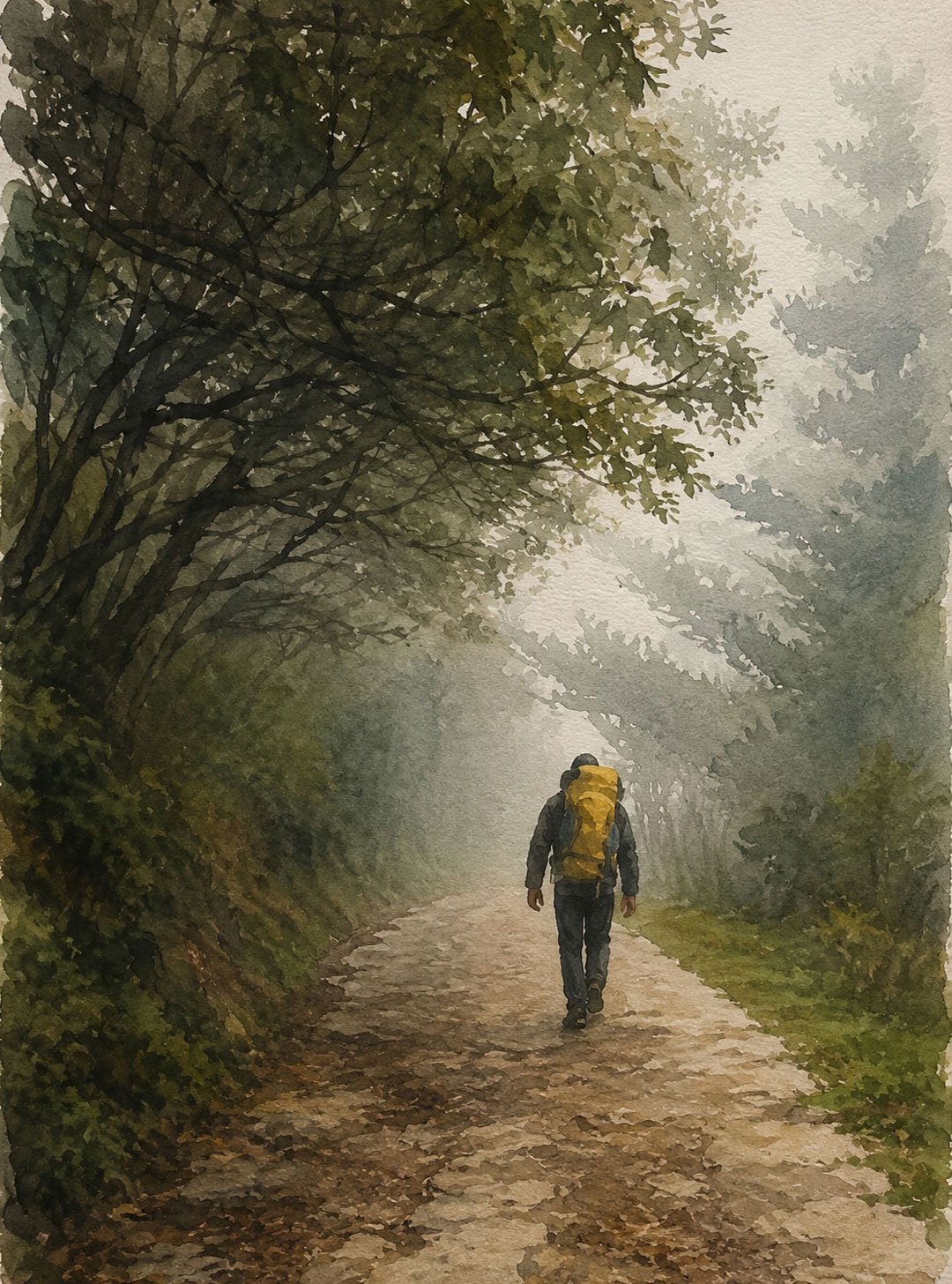
The journey follows the Singalila Ridge along the India–Nepal border, passing through mountain settlements, forests and open ridgelines. Accommodation is available at several points along the trail, so there is generally no need to carry camping equipment or food supplies.
However, trekking in this region involves a few practical considerations for international visitors. The location of the trail along an international border, the availability of accommodation on both sides and the applicable forest and trekking permits require careful planning.
This guide covers the essential arrangements to consider before undertaking the Sandakphu Trek.
Getting to the Sandakphu Trek
Bagdogra Airport and New Jalpaiguri Railway Station (NJP) are the principal gateways for visitors travelling to the Darjeeling and Sikkim region.
If you are planning a leisure holiday in Darjeeling and Sikkim, Sandakphu can be an excellent addition to your itinerary. It offers a change of pace from conventional sightseeing, combining a few days of walking and adventure with the comfort of a wider holiday in the Eastern Himalayas.
We generally recommend starting the trek from Darjeeling or its surrounding areas. From Darjeeling, the drive to Maneybhanjan, the traditional starting point of the trek, takes approximately 1.5 hours. You can spend a few days exploring Darjeeling before heading to the mountains on foot.
After completing the trek, we also recommend allowing one or two nights for a leisurely stay at a suitable hill destination. This provides an opportunity to rest and rejuvenate before continuing with your onward journey.
The trek can therefore be planned as part of a longer holiday rather than as a separate expedition. Your arrival, departure and other destinations in Darjeeling and Sikkim can be coordinated around the walking programme.
Forest Permits and Trekking Documentation
Forest permits and applicable trekking permissions are essential for the Sandakphu–Phalut region.
The requirements and procedures can vary according to nationality, route and the regulations in force at the time of travel. International visitors should not assume that a valid Indian tourist visa alone is sufficient for all sections of the trek.
DarjeelingWalks assists its guests with the necessary forest permits and trekking documentation. We will advise you on the applicable requirements and help arrange the documentation before the trek begins.
Please share your nationality and proposed travel dates with us when making an enquiry so that we can establish the relevant formalities in advance.
Accommodation Along the India–Nepal Border
Accommodation planning is one of the most important aspects of organising a Sandakphu Trek, particularly for international visitors.
The trekking trail follows the India–Nepal border for much of its length. India and Nepal share friendly relations, and Indian trekkers can generally cross the border and stay overnight in Nepal without the immigration formalities that apply to most foreign nationals.
The situation is different for an international traveller visiting India on an Indian tourist visa. Permission to enter India does not automatically permit entry into Nepal. Staying overnight on the Nepal side can therefore create immigration and documentation complications.
There are several settlements and locations along the trekking route where trekkers’ accommodation is available. These include:
Maneybhanjan, Chitre, Meghma, Tonglu, Tumling, Joubari, Gairibas, Kalipokhri, Aal, Thokum, Sabargram, Sandakphu, Phalut, Gorkhey and other settlements along the extended routes
The geographical position of these settlements makes accommodation selection particularly important. Some locations are on the Nepal side of the border, while others are in India. There are also places where the settlement or surrounding area extends across the international boundary.
Consequently, a place that is perfectly suitable for an Indian trekker may not necessarily be appropriate for an international visitor holding an Indian visa.
The choice of overnight stops must therefore take into account the precise location of the accommodation, the applicable immigration requirements and the route being followed.
This is where local knowledge becomes particularly important. DarjeelingWalks can advise international visitors on suitable overnight destinations and help plan an itinerary that takes these border-related considerations into account.
We strongly recommend discussing your accommodation arrangements with us before finalising your trek. Choosing the wrong overnight stop can create unnecessary complications during the journey.
Food and Drinking Water
Food is generally available at the accommodation establishments along the established trekking routes. Most places serve simple meals, including rice, dal, vegetables, noodles and eggs.
The choice is more limited than in Darjeeling or other established tourist destinations. International visitors with specific dietary requirements should inform us in advance so that suitable arrangements can be discussed with the accommodation providers.
Drinking water is available at most established overnight stops. However, visitors should carry a reusable water bottle and appropriate water purification arrangements rather than depend entirely on packaged drinking water being available throughout the trek.
Money, Mobile Connectivity and Language
Money and Payments
There are no ATMs along the trekking route. Visitors should withdraw or exchange sufficient Indian currency before leaving Darjeeling or Siliguri.
Digital payments through UPI are extremely common in India. However, international visitors may not have access to the Indian UPI payment system.
Some international visitors may be able to use eligible digital rupee payment arrangements, depending on their provider and account eligibility. These can be useful at participating businesses.
However, many small payments along the trekking route are made to individual service providers and small businesses. Not all of them are registered to accept digital payments.
Carrying sufficient Indian cash is therefore essential. Do not depend on digital payments or international cards for day-to-day expenses during the trek.
Mobile Connectivity and Electricity
Mobile network coverage is available at most settlements and along several sections of the route. However, connectivity is patchy, and there will be stretches where you may not have a reliable signal.
At some locations, you may need to move to a particular part of the settlement to obtain network coverage. Sandakphu, for example, has areas where finding a suitable network signal can require some local knowledge.
Electricity is available at almost all established accommodation locations, so charging mobile phones and other small electronic devices is generally not a major problem.
Nevertheless, visitors should not expect continuous internet connectivity throughout the trek.
Language
Nepali is the principal local language spoken in the Singalila region. Bengali and Hindi are also widely understood.
English is understood by many people associated with tourism, including several accommodation providers and trekking personnel. Most can communicate in basic English, although the level of fluency varies.
Having a local guide is useful for communication, particularly when dealing with accommodation, transport and other arrangements along the trail.
Clothing and Personal Equipment
Temperatures can vary considerably between the foothills and the higher sections of the Singalila Ridge. Even during the main trekking seasons, mornings and evenings at Sandakphu and Phalut can be cold.
Visitors should carry suitable layered clothing, comfortable trekking footwear, rain protection and personal essentials appropriate to the season.
A full camping setup is generally unnecessary on the established routes because accommodation and meals are available along the way.
DarjeelingWalks will provide guests with a detailed clothing and personal equipment checklist before the trek. This will be based on the season, route and expected weather conditions.
Altitude, Safety and Travel Insurance
Sandakphu stands at 3,636 metres above sea level. Although this is not an extreme Himalayan altitude, altitude-related illness is possible.
The trek involves walking for several consecutive days, with sections of sustained ascent and descent. A reasonable level of physical fitness is important.
Headaches, nausea, dizziness, unusual fatigue and breathlessness should not be dismissed as normal effects of trekking. Anyone experiencing concerning symptoms should stop ascending and seek appropriate medical assistance. Severe symptoms require prompt descent and medical attention.
International visitors should also arrange suitable travel insurance before arriving in India. The policy should explicitly cover trekking at the intended altitude and, ideally, emergency evacuation and medical treatment.
Medical facilities are limited along the trekking route. Visitors should carry their regular medication and inform their guide of any relevant medical requirements.
Plan Your Sandakphu Trek with DarjeelingWalks
Planning a Sandakphu Trek for an international visitor requires more than selecting a route and booking accommodation. The India–Nepal border, forest permits, suitable overnight stops and local arrangements all need to be considered.
DarjeelingWalks brings 25 years of experience in organising treks in the Sandakphu and Singalila region. We also handle international trekkers visiting Sandakphu every year and understand the practical requirements of organising these journeys for overseas visitors.
We can assist with:
Planning the trek as part of a wider Darjeeling and Sikkim holiday.
Selecting a suitable route and overnight stops.
Arranging accommodation along the trail.
Organising local guides and trekking support.
Assisting with forest permits and applicable trekking documentation.
Coordinating transport before and after the trek.
Providing detailed clothing and personal equipment guidance.
Whether you are looking for a shorter Sandakphu walk or a longer journey towards Phalut, we can help you plan the experience around your available time and interests.
Planning to include Sandakphu in your Himalayan holiday?
Get in touch with us to discuss your travel dates, nationality and preferred itinerary.
Phone / WhatsApp: +91 9733000590