History of Darjeeling Tea
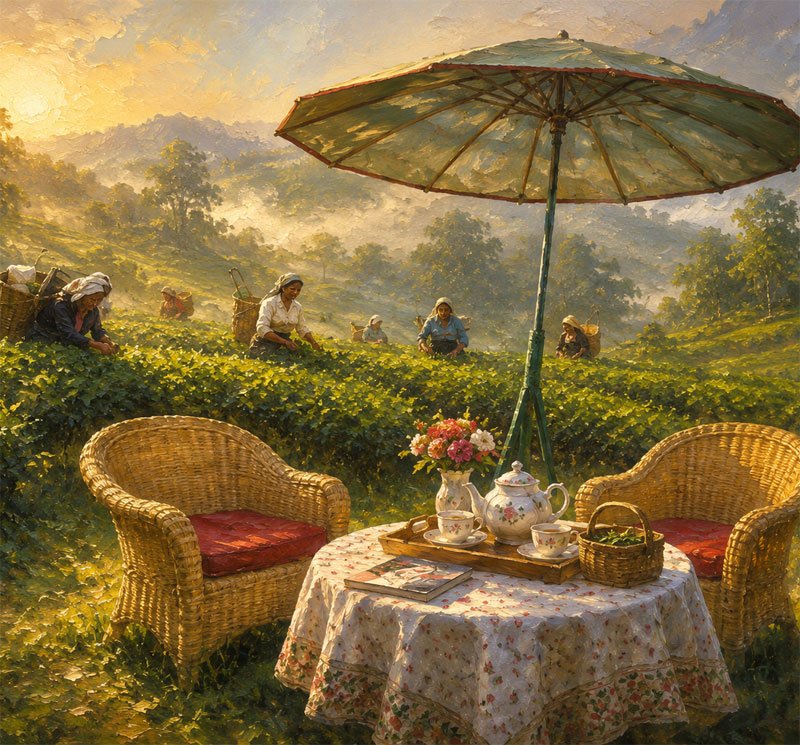
Darjeeling tea is known across the world for its distinctive character and delicate flavour. Yet its history is relatively recent. Unlike some of the older tea-growing regions of Asia, Darjeeling’s tea industry developed during the nineteenth century, under British colonial rule.
The story began with a series of experiments to grow tea in the Himalayan foothills. These early efforts led to the establishment of commercial tea gardens across the hills. Over time, tea cultivation became closely connected with Darjeeling’s economy, landscape and communities. It also brought people from neighbouring regions to work and settle in the hills, shaping the social character of the tea-growing areas.
Today, Darjeeling tea is recognised internationally as a distinctive regional product. Its history, however, is not simply a story of a successful agricultural experiment. It is also a story of colonial enterprise, migration, plantation labour and the transformation of a mountain landscape.
Before the Tea Gardens
Darjeeling’s association with tea began after the British acquired the hill territory in 1835 from the Raja of Sikkim. At the time, the British were developing Darjeeling as a hill station and a sanatorium for Europeans seeking relief from the heat of the Indian plains.
The surrounding hills were still largely covered by forests, with scattered settlements and established communities, including the Lepchas. The colonial administration encouraged migration and cultivation as it sought to develop the new hill station and its surrounding territory.
Tea was already attracting considerable British interest elsewhere in India. The East India Company was looking for ways to reduce dependence on tea imported from China. Experiments with tea cultivation were being undertaken in different parts of the country, particularly after the discovery and development of the tea industry in Assam.
Darjeeling’s climate and elevation appeared suitable for growing tea. The cool temperatures, rainfall and mountain slopes offered conditions different from those of the plains.
Dr Archibald Campbell and the First Experiments
An important figure in the early history of Darjeeling tea was Dr Archibald Campbell. He was appointed Superintendent of Darjeeling in 1839 and played a significant role in the development of the hill station.
Around 1841, Campbell began experimenting with tea cultivation using seeds of the Chinese variety of tea. These seeds are generally understood to have come from the Kumaon region, where tea cultivation had also been introduced experimentally.
Some of the earliest plants were grown near Campbell’s residence at Beechwood. The experiments demonstrated that tea could be cultivated successfully in the Darjeeling hills. Government nurseries were subsequently established to raise tea plants and encourage further cultivation.
The early experiments were important, but they did not immediately create a commercial industry. Several years of trial and development were needed before tea cultivation became an organised business.
The First Commercial Tea Gardens
Commercial tea cultivation began to take shape during the 1850s. The relaxation of restrictions on the leasing of land encouraged private investors and European planters to establish tea gardens in the hills.
Alubari and the Lebong area are associated with some of the earliest commercial ventures. Alubari was established in 1856 by the Kurseong and Darjeeling Tea Company. Other gardens followed, including those at Ging, Ambutia, Takdah, Phoobsering and Badamtam.
The industry expanded rapidly. New plantations were established on suitable slopes, and land that had previously been covered by forest or used for other purposes was brought under tea cultivation. Tea factories were also developed to process the leaves close to the plantations.
By 1866, historical records listed 39 tea gardens in the Darjeeling district, with around 10,000 acres under cultivation. By 1874, the number of gardens had risen to more than 100. Tea had become an established commercial activity in the region.
The Growth of the Plantation Economy
The expansion of tea cultivation changed the economy of the Darjeeling hills. Tea estates required land, investment, factories, transport and a large workforce. Roads and other infrastructure became increasingly important for moving tea from the gardens to markets and ports.
The industry also attracted capital from British companies and individual planters. Tea produced in the hills was transported to Calcutta and other trading centres before reaching markets overseas.
As production increased, Darjeeling tea began to develop a reputation for its distinctive character. The small-leaved Chinese variety of tea, combined with the growing conditions of the hills and the methods used in processing, contributed to the qualities that later became associated with the region.
Tea cultivation also spread beyond the immediate Darjeeling hills into the Terai foothills. The plantation economy of the wider district therefore developed across different elevations and landscapes, although the tea produced in the hills acquired a particularly distinct identity.
The People Behind the Tea Gardens
The growth of the tea industry depended on a substantial workforce. Tea cultivation and processing required labour throughout the year, from preparing the land and maintaining the bushes to plucking leaves and working in the factories.
As the plantations expanded, workers arrived from neighbouring areas, particularly from Nepal. Migration increased the population of the tea-growing hills and contributed to the development of settlements around the estates.
The history of these communities is an essential part of the history of Darjeeling tea. The plantation workforce included generations of families whose lives became closely connected with the gardens. Their knowledge, labour and everyday practices helped sustain the industry.
The growth of the plantations also took place within the unequal economic and social structures of the colonial period. Workers lived and worked within estate systems in which land, employment and access to many basic facilities were closely tied to plantation management. The history of tea in Darjeeling must therefore be understood through both the commercial success of the industry and the experiences of the people who worked in it.
Darjeeling Tea After Independence
India became independent in 1947, but many Darjeeling tea gardens continued to operate under British ownership for some years. Ownership gradually changed, and Indian companies and business groups became increasingly involved in the industry.
Tea remained one of the principal economic activities of the Darjeeling hills. However, the industry also faced changing market conditions, rising costs and competition from tea-growing regions elsewhere in India and abroad.
Despite these challenges, Darjeeling tea retained a distinctive position in the international market. Its reputation was built around the character of the tea, the particular growing conditions of the region and the traditions of cultivation and processing developed over generations.
Recognition as a Geographical Indication
As Darjeeling tea became increasingly recognised in international markets, protecting its name and identity became important.
In 2004, Darjeeling tea received a Geographical Indication (GI) registration in India. This recognition linked the name Darjeeling tea to tea produced and processed within the designated geographical area under the applicable requirements.
The GI status was an important step in protecting the identity of the product and distinguishing genuine Darjeeling tea from teas marketed under similar descriptions.
The name now represents more than a particular style of tea. It identifies a product whose character is associated with a specific region, its natural conditions and the skills developed by generations of tea growers and workers.
A Landscape Shaped by Tea
Today, tea gardens are among the most recognisable features of the Darjeeling hills. Their carefully maintained rows of bushes follow the contours of the slopes, often surrounded by forests, villages and mountain streams.
The gardens are not simply agricultural properties. They are living landscapes, shaped by more than a century and a half of cultivation and by the communities whose lives are connected with them.
Understanding the history of Darjeeling tea adds another dimension to a visit to the region. A walk through a tea garden can reveal the relationship between the land, the plants, the factory and the people who work there. It also offers an opportunity to understand how an industry introduced during the colonial period became one of the defining features of Darjeeling.
For visitors interested in the region’s history and everyday life, the tea gardens provide a way to look beyond the familiar views of the mountains and discover another important part of the Eastern Himalayas.
Explore Darjeeling’s tea country with DarjeelingWalks
Discover the history, landscapes and communities of Darjeeling’s tea gardens through a locally informed walking experience. To enquire about a tea garden walk or a personalised experience, contact us.
Phone / WhatsApp: 9733000590